
Why I Believe Hybrid Email Solutions Are the Most Trusted and Recommended Option for Banks in India
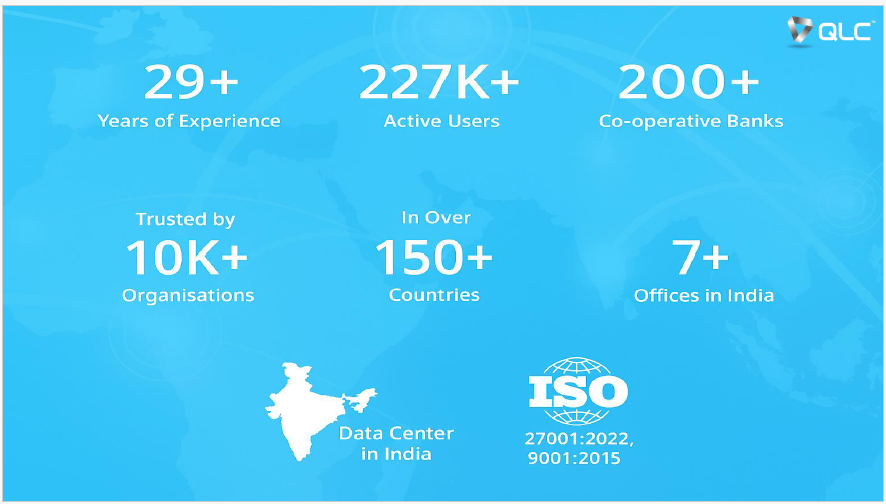
After working with over 200 cooperative banks across India for the past 29 years, I’ve seen firsthand how email security can make or break a financial institution. Today, I want to share why I’m convinced that hybrid email solutions offer the best protection for Indian banks, especially in our current cybersecurity landscape.
The Reality of Email Attacks in Banking
Let me start with a sobering fact: over 80% of email communication in banks happens internally – between head offices and branches. When banks rely purely on cloud-based services for this communication, they’re essentially forcing non-technical branch users to maintain constant internet access. This creates a massive vulnerability.
I’ve witnessed how hackers exploit this weakness. They target non-technical users with sophisticated phishing emails, creating what we call “secure tunnels” for silent infiltration. Once they’re inside the network, they perform lateral movement to collect sensitive data, often going undetected by Security Operations Centers (SOCs) for weeks.
The statistics are alarming: attackers typically reside in banking networks for 30-60 days before launching major attacks. This is precisely why the RBI recommends regular phishing simulation drills and multi-layered defense strategies.
How Hybrid Email Architecture Prevents Internet-Driven Malware
Here’s where hybrid email solutions shine. Instead of forcing branch users to access cloud services directly, hybrid architecture eliminates internet dependency for end-users. Here’s how it works:
Emails pass through a secure vendor data centre where they’re filtered and then pushed directly to the bank’s local server. This allows branch staff to access emails through the LAN without needing internet connectivity.
This approach prevents malware activation in a crucial way. In a 100% cloud model, malware can easily contact external command-and-control servers. But in a hybrid model, restricted internet access at endpoints neutralises threats before they can execute, providing enhanced protection against ransomware, spyware, and phishing attacks.
The Power of Dual-Layer Security Filtering
I’ve seen too many single-point-of-failure scenarios in banking security. That’s why I advocate for the dual-layer filtering approach that hybrid solutions provide:
First Layer: Vendor Data Centre Cloud-grade filtering tools including anti-virus, anti-malware, Advanced Threat Protection (ATP), anti-phishing, and anti-spoofing are applied here. Suspicious emails are quarantined or rejected before they even reach the bank’s perimeter.
Second Layer: Bank’s Local Server Every email gets scanned again within the bank’s local infrastructure. This redundancy ensures that zero-day or sophisticated threats missed by the first layer are detected locally before delivery.
This two-layered approach significantly reduces false negatives, ensuring even complex threats are filtered out while protecting both data and the bank’s reputation.
Complete Data Sovereignty and Compliance
One of the biggest advantages I’ve observed with hybrid solutions is complete data sovereignty. The bank retains full ownership and control over all email data, reducing dependence on external service providers for retrieval, retention, or deletion.
For compliance, this is a game-changer. Archiving policies can be applied locally, ensuring conformance with:
- RBI’s cybersecurity frameworks
- CERT-In guidelines
- NABARD guidelines
- The Digital Personal Data Protection (DPDP) Act 2023
The local storage approach addresses data localisation requirements, breach notification protocols, and access transparency mandates that these regulations demand.
Dual-Layer Audit Logs for Forensics
When security incidents occur (and they will), having comprehensive audit trails is critical. Hybrid solutions provide two distinct logging layers:
Cloud-Level Logs Maintained by the vendor, these track email flow, quarantine actions, filter results, and metadata at the vendor’s data centre.
Local Email Server Logs Maintained by the bank, these offer granular visibility into internal email delivery, user access patterns, forwarding rules, and failed login attempts.
Comparing both logs helps pinpoint incident origins and timelines, identifying whether faults occurred at the vendor’s filtering layer or within the bank’s infrastructure. The local logs are tamper-proof, offering superior data integrity and control for legal and regulatory contexts.
Dramatically Reduced Attack Surface
By eliminating direct internet dependency for end-users, especially at branch levels, hybrid architecture drastically reduces the exposed surface area vulnerable to cyber attacks. Emails are delivered over the internal LAN without requiring users to browse or access cloud services directly.
This makes it significantly harder for hackers to exploit open internet sessions, weak browsers, or untrained users. The centralised scanning, policy enforcement, and local delivery mechanisms create multiple barriers that external attackers must overcome to infiltrate, propagate, or exfiltrate data.
This is particularly crucial for cooperative banks, where IT awareness might be limited but the value of data is extremely high.
Regulatory Alignment
I’ve worked extensively with regulatory compliance, and hybrid email solutions align perfectly with current guidelines:
- RBI’s Cyber Security Framework mandates email protection, internal segregation, and secure communication handling
- CERT-In Guidelines require periodic audits, incident detection, and multi-layer security controls
- NABARD Guidelines increasingly stress cyber risk management and internal controls
- DPDP Act (2023) demands data localisation, breach notification, and access transparency
Hybrid solutions naturally address all these requirements without requiring banks to retrofit their existing infrastructure completely.
My Recommendations
Based on my experience with over 10,000 organisations across 150+ countries, here are my key takeaways:
Enhanced Security: Hybrid email offers dual-layer filtering and local storage, significantly reducing attack vectors and malware spread compared to pure cloud or pure on-premise solutions.
Regulatory Alignment: The model aligns perfectly with Indian banking regulations, ensuring robust compliance without compromising operational efficiency.
Operational Efficiency: Local data sovereignty and dual audit logs provide critical advantages for forensics, audits, and long-term cost efficiency.
The Bottom Line
In today’s threat landscape, Indian banks cannot afford to treat email security as an afterthought. The hybrid approach I’ve outlined provides the security depth that banking institutions need while maintaining the operational flexibility that modern banking demands.
The 227,000+ active users across our network and ISO 27001:2022 and 9001:2015 certifications validate this approach. With our data centre located in India and 7+ offices across the country, we understand the unique challenges that Indian banks face.
If you’re evaluating email security solutions for your bank, I strongly recommend considering the hybrid approach. The combination of cloud-grade filtering with local data control offers the best of both worlds – advanced threat protection with complete regulatory compliance.
Contact us for a FREE consultation.
Sandeep Patil is the National Strategy Head – BFSI (India) at QuantumLink Communications Pvt Ltd. He holds LLB, LLM, MBA, CISA, and CEH certifications and has 29+ years of experience in banking technology and cybersecurity.